Monday, September 29, 2008

Citigroup to buy US bank Wachovia


Wachovia, the fourth-largest US bank, is being bought by larger rival Citigroup in a rescue deal backed by US authorities.

Wachovia customers were told the action would provide "full protection for all their deposits", and that the bank would continue to operate as normal.

Under the deal, Citigroup will absorb up to $42bn (£23bn) of Wachovia losses.

US authorities said the decision to back the sale had been made "under extraordinary circumstances".

The comment came from the Federal Deposit Insurance Corporation (FDIC), the government body that guarantees the safety of banking deposits.

"This action was necessary to maintain confidence in the banking industry given current financial market conditions," said FDIC chairman Sheila Bair.

Mortgage debt

Citigroup is taking on $312bn of Wachovia loans.

Any debts on these loans above the $42bn Citigroup will absorb will be taken on by the FDIC in return for $12bn in Citigroup stock and other share options

Wachovia is just the latest bank that has needed to be rescued as a result of high levels of bad mortgage debt and the wider turmoil in the global financial sector.

Analysts said much of its problems were caused by its 2006 purchase of mortgage lender Golden West for $25bn at the height of the then US housing boom.

Rose Grant, of Eastern Investment Advisors, said it seemed a good deal for Citigroup.

"One thing that Citigroup has been wanting to do for a while is to expand its retail operations because they are in very limited areas so this would basically allow them to do that," she said.

Treasury Secretary Henry Paulson said the sale of Wachovia was necessary as its failure "would have posed a systemic risk".

Wachovia's sale comes just days after fellow US lender Washington Mutual was seized by regulators before its assets were sold to JPMorgan Chase.

US politicians have begun voting on a $700bn deal to rescue the US financial system which was agreed by negotiators on Sunday.

India-EU to ink trade pact by 2009; set 100 bl Euro target


India and the European Union (EU) on Monday agreed to conclude a broad-based Trade and Investment Agreement by 2009 and double their trade turnover to 100 billion Euros in the next five years, giving a fresh impetus to their strategic partnership.


The decision was taken during the Ninth India-European Union(EU) summit which was attended by Prime Minister Manmohan Singh and French President Nikolas Sarkozy in his capacity as chairman of the rotating presidency of the 27-member EU in this resort town of French Riveira.

Addressing a joint press conference with Sarkozy and European Commission President Manuel Barrosa at the end of the day-long summit, Singh announced that the world's two largest trading partners are expected to wrap up the ambitious Trade and Investment Agreement by 2009.

A Joint Press Communique issued at the end of the Summit said EU and India recognised the importance of conclusion of the trade agreement to fulfill the expectations of businesses on both sides and to further strengthen the bilateral economic relationship.

Towards this end, the communique said they will endeavour to achieve a balanced and ambitious outcome.

While welcoming the signing of a landmark horizontal civil aviation agreement which will allow more airlines to operate flights between India and EU countries, the communique said they are working on a maritime transport agreement that will be mutually beneficial.

Sarkozy at a joint press conference with Singh and European Commission President Barrosa said trade expansion and a new trade agreement will be important pillars to give a new dimension to Indo-EU strategic partnership.

US lawmakers publish rescue deal


House Speaker Nancy Pelosi announces bail-out package
US politicians have announced a $700bn deal to rescue America's financial system and end the credit crunch.

The move, backed by both Republican and Democratic leaders, allows the Treasury to spend up to $700bn (£380bn) buying bad debts from ailing banks in the US.

President George W Bush urged lawmakers to support the bill, which needs approval by both houses of Congress.

Some Republicans have voiced objections to massive state intervention in the financial sector.

The deal was announced after days of high-level wrangling between Republicans and Democrats in Congress over the content of the bill.

Both parties had vigorous objections to a proposal submitted last week by Treasury Secretary Henry Paulson that would have given him sweeping powers over how the money was spent.

His plan was prompted by a string of failures in large US financial institutions, including the government bail-out of insurance giant AIG.

If approved by the Senate and House, the revised plan will lead to the biggest intervention in the markets since the Great Depression in the 1930s.

Nancy Pelosi, the Democratic Speaker of the House of Representatives, said the agreement was "not a bailout of Wall Street", but designed to ensure pensions, savings and jobs would be safe.

Democratic Senate leader Harry Reid said the deal was a big improvement on the initial proposal.

"They wanted a blank cheque and we couldn't give them one... Now we have to get the votes."

'Necessary tools'

The negotiations had lasted all weekend and were so intense that at one point Treasury Secretary Hank Paulson suffered what was described as a "woozy spell".

After senior members of Congress announced the agreement, President Bush gave his backing to the draft legislation.

He said the bill would send a strong message that the US was serious about restoring confidence in its financial markets.

"This bill provides the necessary tools and funding to help protect our economy against a system-wide breakdown," he said in a statement.

The US administration had wanted a deal to be announced before markets opened in Asia, but Asian investors appear yet to be convinced about the rescue plan's impact.

By Monday afternoon trading in Japan, Tokyo's main Nikkei 225 index was down 118 points or 0.8% to 11,776.

The fall on Hong Kong's Hang Seng was even more pronounced, down 383 points or 2% to 18,230.

No golden parachutes

The deal addresses several of the key concerns raised by both Democrats and Republicans:

The government will get the money in tranches - $250bn straight away, and $100bn at the request of the White House; Congress can veto the release of the remaining $350bn
Banks that accept bail-out money will have to hand over shares in return, which allows tax payers to benefit from the banks' recovery
Top bankers, meanwhile, will see their pay limited, and "golden parachutes" - huge payments when they leave the firm - will be banned
The banking industry will have to help finance the bail-out if the money can not be recovered from the struggling banks themselves
Four agencies will monitor the deal, including an independent Inspector General and a bipartisan oversight board
Banks will be obliged to join an insurance programme to protect them against the losses of mortgage-backed securities
The bill, called the Emergency Economic Stabilization Act of 2008, faces its first hurdle later on Monday when the House votes on it, says the BBC's Justin Webb in Washington.

It goes before the Senate later in the week.

The proposed legislation was now "frozen", said Ms Pelosi, which means critics can not strike out individual provisions that they do not like.

However, several key critics of the deal called on their fellow legislators to block it.

Financial woes

The Bush administration submitted its initial proposal after several financial institutions got into trouble - unable to free up the money to keep their daily business going.

The liquidity problems have not been limited to the US.

In the United States' largest bank failure, Washington Mutual was taken over by regulators and sold on to JPMorgan Chase
Lehman Brothers collapsed, Merrill Lynch sought refuge in a takeover by Bank of America and Morgan Stanley secured a large capital injection from a Japanese rival
US insurance giant AIG had to be bailed out by the US government, which in effect took an 80% stake in the firm
In the UK, meanwhile, mortgage lender Bradford & Bingley is set to be nationalised, with the savings part of the business to be sold to Spanish banking group Santander
The governments of Belgium, Luxembourg and the Netherlands agreed late on Sunday evening to invest 11.2bn euro in huge financial services group Fortis, in effect nationalising it.

Sunday, September 28, 2008

Bank giant HSBC axes 1,100 jobs


Banking giant HSBC is to axe 1,100 jobs worldwide, blaming the current financial turmoil for the decision.

About half of the cuts, which will affect back room jobs at its global banking and markets operation, will take place in the UK.

HSBC employs about 335,000 people around the world.

Last month, HSBC said half year profits fell 28% to $10.2bn (£5.2bn), as it was forced to write-off $14bn from bad debts in the US and asset write-downs.

Meanwhile, pre-tax profits fell 35% to $2.1bn during the same period.

An HSBC spokesman said the firm had opted to reduce its workforce, "because of market conditions and the economic environment, and our cautious outlook for 2009".

Many of the job-losses will be at the headquarters of HSBC's investment banking division, which are in London's Canary Wharf.

Banks around the world have been coming under increased pressure from the credit crisis currently affecting financial markets.

The problems have forced governments to step in and boost money markets as well as bail out a number of companies.

Earlier this year, the UK government had to buy mortgage lender Northern Rock, while in the US lenders Fannie Mae and Freddie Mac have been rescued as well as insurer AIG and investment bank Lehman Brothers filed for bankruptcy.

'Great progress' in US bail-out


US congressional leaders say they have reached the broad outline of a rescue plan for the American financial system.

Democratic House Speaker Nancy Pelosi said "great progress" had been made - but details remain to be agreed.

The Bush administration wants $700bn (£380bn) to be able to buy bad debt that is freezing up financial markets.

A vote could be held in the House of Representatives as early as Sunday, with negotiators keen to reassure the markets before they reopen on Monday.

The deal proposes that the government would spend the $700bn to buy up bad mortgage-related debts from US banks, borrowing the cash from the money markets by issuing more government debt.

A White House spokesman welcomed the announcement and praised the efforts of the negotiators.

"We're pleased with the progress tonight and appreciate the bipartisan effort to stabilise our financial markets and protect our economy," said Tony Fratto.

The outline deal gives the treasury secretary powers to oversee the two-year plan, but critics have insisted on the inclusion of greater oversight and reporting.

The BBC's Justin Webb in Washington says the tentative agreement that appears to have been reached is thought to include a measure to limit the pay for executives of companies which seek financial assistance, which was a key demand of the Democrats.

At the request of Republicans, who have strongly criticised some elements of the administration's proposal, the accord is believed to include the setting up an insurance program for mortgage-backed securities.

Payoff restrictions

A statement from Nancy Pelosi's office said the new agreement would see $250bn issued immediately, and another $100bn when the president wanted to spend it.

But the the final $350m would only be released after review and approval by Congress.

There would also be measures to protect taxpayers, who would be given an ownership stake and profit-making opportunities in relation to any assets that were sold.

It also puts new restrictions on executive compensation for participating companies, including no "golden parachute" payoffs.

Earlier on Sunday it was announced that the two-year project would be supervised by a board of officials, including the Federal Reserve chairman, and scrutinised by Congress's investigative arm and an independent inspector general.

Finally, the government could use its power as the owner of mortgages and mortgage-backed securities to help more struggling homeowners modify the terms of their home loans.

'All night'

US Treasury Secretary Henry Paulson, who took part in the talks, said that Congressional leaders had been "working very hard".

"We've made great progress toward a deal, which will work and will be effective in the marketplace, and effective for all Americans," he told a news conference.

But Ms Pelosi said the deal had to be committed to paper before it could be formally agreed.

Senate Democratic leader Harry Reid said Congress hoped to be able to make an announcement on the deal later on Sunday.

"We're committing it to paper tonight and our people will work all night long," he said.

Congressional leaders are trying to finalise the deal in time for the opening of the Asian markets on Monday morning.

Saturday, September 27, 2008

House of Reps to vote on Indo-US nuke deal tonight


The House of Representatives has wrapped up the 40 minute debate on the bill on the Indo-US nuclear deal since the voting on the bill will take place later tonight.


Meanwhile, Senate Majority leader Harry Reid has indicated that the legislation on the subject in the upper Chamber will be taken up and passed only next week.

However, support for the nuclear deal came from House Foreign Affairs Committee Chairman Howard Berman.

A known opponent of the deal, Berman, supported the Senate version of the Bill saying the deal is a positive step as it will bring India into the non-proliferation regime.

House Foreign Affairs Committee Chairman Howard Berman, a known opponent of the deal, supported the Senate version of the Bill saying the deal is a positive step as it will bring India into the non-proliferation regime.

Fellow Democrat Edward Markey, who lead the charge on behalf of those opposed to the Bill, insisted on a recorded vote at the end of the debate following which the voting was postponed and it is now expected to be taken up on Sunday.

"I'm a strong advocate of closer US-India ties, including peaceful nuclear cooperation. I voted for the Hyde act which established a framework for such cooperation. The bill before us today will approve the US-India agreement for peaceful nuclear cooperation," Burman said.


"Integrating India into a global nonproliferation regime is a positive step," he said, adding Bush Administration has assured him they will push for an NSG decision prohibiting the export of enrichment and reprocessing equipment and technologies to states that are not party to Non-Proliferation Treaty (NPT).


Fellow Democrat Ellen Tauscher, however, disagreed maintaining that the Bill flies in the face of decades of American leadership to contain the spread of the weapons of mass destruction.


"The India deal would give a country with a dismal record of nonproliferation all the benefits of nuclear trade with none of the responsibilities. India has been denied access to the market for three decades and for good reason."


"India is not a signatory of the nonproliferation treaty and has not agreed to disarmament or signed the treaty," Congresswoman Tauscher said.


The debate on the House floor brought out law makers along expected lines in supporting and opposing the revised Bill introduced by Chairman Berman, who had reservations over the deal and is understood to have brought the second version after senior Bush Administration officials talked to him on the need for early nod to the civil nuclear initiative.


However, the Congressman said he still has concerns about ambiguities in the agreement and that several documents should be inserted to clarify these.


"These documents constitute key and dispositive parts of the authoritative representations described in section 102 of this bill which gives the right to disapprove a presidential decision to resume civil nuclear cooperation with any country, not just India, that tests a nuclear weapon.


"It will also ensure that India takes the necessary remaining steps to bring its IAEA safeguards agreement fully into force and include an additional protocol...I will be voting for H R 7081," the senior Democrat said at the end of his opening statement.


Ranking Republican on the House Foreign Affairs Committee Ros Lehtinen also voiced support for the legislation.


"The US-India nuclear cooperation agreement is not one we would offer to just any nation. It is a venture we would enter into only with our most trusted, democratic allies. I believe that stronger economic, scientific, diplomatic and military cooperation between the US and India is in the national interest of both countries," the Florida Congresswoman said.


"... this nuclear cooperation agreement is essential in continuing to ensure India's active involvement in dissuading, isolating, and if necessary sanctioning and containing Iran for its efforts to acquire chemical, biological and nuclear weapon capabilities," Ros-Lehtinen said.


A strong supporter of India and currently the Chair of the Sub Committee on Middle East and South Asia Democrat Gary Ackerman strongly supported the Bill.


"It (the approval of the deal) means the IAEA will be able to inspect two-thirds of India's nuclear facilities because those will be under safeguards and all civilian nuclear facilities will also be under safeguards. For the first time ever India will commit to guidelines and will adhere to the NSG guidelines," Ackerman said.


The deal will send a clear message to "rogue states" that responsible nuclear powers are welcomed by the international community, the former Co-Chair of the Congressional India Caucus on India and Indian Americans said.


"India would pursue its national interests as it's been doing outside of the nonproliferation mainstream and we get to inspect nothing. The other is to make a deal with India and the US and the international community will get a window in perpetuity into two-thirds of India's nuclear facilities...”


"The choice is clear, it's time for 21st century policy toward India and encourages India's growth as a nuclear power and solidifies our relationship for decades to come," the New York Democrat said.


But another Democrat from California Lynn Woolsey cautioned the agreement will permanently undermine decades of nonproliferation efforts.


"It sets a frightening precedent. If a country is unhappy about the rules of nuclear possession, it can simply go around them, breaking them."

"And what does it matter India ignored the international agreement? Any sanction? Any punishment? Nope. Just a lucrative deal with the US. If we approve this deal, we lose our moral high ground," she added.


For most part of the debate, the support for the Bill came along bi-partisan lines.


Massachussetts Democrat Markey, the top opponent of the Bill, questioned not only the judgement of Bush administration in going for the deal but also the non-proliferation gains.


"Most people think this is a debate about India. It is not. This is a debate about Iran, North Korea, Pakistan, Venezuela, about any other country in the world that harbours the goal of acquiring nuclear weapons. With this vote, we are shattering the nonproliferation rules, and the next three countries to march through the broken glass will be Iran, North Korea, and Pakistan," Markey said in closing comments.


"This is an all out nuclear arms race. Pakistan will respond. That is what President Bush should be working on, not fueling it, but trying to negotiate an end to it," he said.


A prominent supporter of India South Carolina Republican Joe Wilson argued a vote in favour of the nuclear deal will be a "giant step forward" in strengthening America's partnership with the people of India.


"... the two nations have a vested and shared interest in expanding opportunities to compete in the global economy. US chamber of commerce has estimated that this civilian nuclear agreement will create as many as 250,000 high-tech jobs right here in America," Wilson said.


California Republican Ed Royce called the Hyde Act as a tremendous foreign policy achievement of the 109th Congress but added the "failure by this congress to push this agreement across the finish line would be foreign policy malpractice".


"The Indian nuclear industry will overcome international restrictions and will reach their full potential to do this. Opposing this won't effect India. It will only hurt our relationship with India and US interests... other countries, notably France and Russia, can enter the Indian nuclear market with a potential USD 100 billion investment," he said.

Sensex plunges by 940 pts on global financial crisis


The delay in passage of a US bailout package for ailing financial markets and shut down of America's second largest bank caused a global meltdown with Indian bourses crumbling by a huge 940 points, biggest point-wise fall in the last 25-week, in the week under review.


Even as the US administration continued its debate on a USD 700-billion rescue package for the shattered financial system, the on-going credit crisis claimed yet another victim leading to across the board sell-off in the stock markets.


The US regulators on Thursday seized the 119-year-old Washington Mutual Inc, a leading savings and loan bank in the US, and sold its banking operations to JP Morgan Chase for 1.9 billion dollars.


In the week to 27th September, the Bombay Stock Exchange 30-share barometer tumbled by 940.14 points or 6.70 per cent to end the week at 13,102.18 against its last weekend's close.


Similarly, the broader 50-share Nifty of the National Stock Exchange nosedived by 260 points or 6.12 per cent to close the week at 3,985.25 from its last weekend's close.


Analysts said political squabbling blocked the potential deal on a bailout proposal, on which investors globally have pinned their hopes for revival in the markets.


Domestic markets witnessed a relief rally on Wednesday as the bellwether Sensex recovered by about 122 points on some short-covering of positions ahead of the expiry of derivatives series on Thursday.


Investors looked unwilling to carry forward their long positions in the light of lingering worries about an imminent US economic slowdown even as the first-time jobless data in America jumped to its highest in seven years, pointing to a recession.


IT and realty sectors were under tremendous pressure on concerns about the US recession leading to a global slowdown.


The equity markets witnessed heavy capital outflows as Foreign Institutional Investors pulled out nearly 2.0 billion dollars in September following the on-going credit crisis.


Ranbaxy Lab registered a large fall of 23.67 per cent on reports that the Canadian drug regulator expressed caution about the company's drug marketing applications after the US drug regulator blocked sale of more than 30 generic medicines.


Heavy-weights such as Wipro, Satyam Computers, DLF, TCS, Infosys Tech, HDFC, Hindalco, SBI, Maruti Suzuki, BHEL, Tata Motors, ICICI Bank and Jaiprakash Associates tumbled by about nine to 18 per cent.


Except the BSE FMCG index, which closed in the green, all other indices on the BSE and NSE registered losses in a range of 4.0 to 12 per cent.


The broad-based BSE-100 Index tumbled by 451.63 points or 6.20 per cent to end the week at 6,834.14 from 7,285.77.


The BSE-200 Index and the Dollex-200 were also quoted sharply lower at 1,590.58 and 569.61 at the weekend compared to last weekend's close of 1,695.81 and 611.44 respectively.


On the NSE, the S&P CNX Defty slumped by 224.30 points or 7.03 per cent to close the week at 2,965.50 from 3,189.80 last weekend and the CNX Nifty Junior also finished the week sharply lower by 428.85 points or 6.51 per cent to 6,162.70 from 6,591.55.

Wednesday, September 17, 2008

RBI move to reduce pressure on rupee: Citi

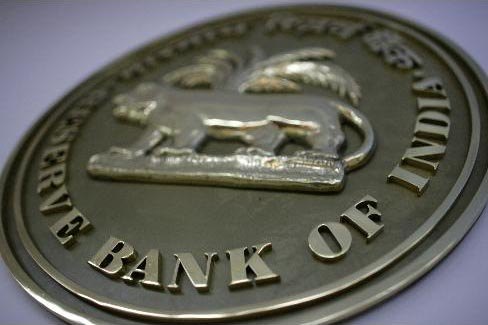
Reserve Bank Of India


Citigroup India, in a note released on Wednesday said the Reserve Bank measures announced last evening would help reduce the pressure on rupee.

Rohini Malkani, economist, Citigroup India said the RBI could become more active in the coming months.

She said given the volatile market situation, near term rupee weakness is likely to continue and could trade in the Rs 45-47 range. But over a longer term , ''we maintain our rupee appreciation view and expect the unit to trace back to Rs43-44 levels by March 09.'', she said.

Rupee which almost touched 47 mark on Tuesday recovered today to 46.34 levels.

According to Malkani, the key reasons for the 10 per cent depreciation in rupee in the past month were the strong dollar rally and acute dollar shortage in the local market coupled with the dis-continuation of the Special Market Operation Scheme (where RBI provided dollars to the oil companies in lieu of oil bonds).

The dollar shortage was a result of continued portfolio flows, offshore demand and demand from oil companies, she said while adding that exporters are now holding back from selling.

Global Confidence Falls as Lehman, AIG Roil Financial Markets


Confidence in the global economy fell in September as financial turmoil deepened in the U.S., a survey of Bloomberg users on five continents showed.

The Bloomberg Professional Global Confidence Index fell to 11.3, from 14.1 in August. Confidence among U.S. respondents fell to 10.6 from 18.2, while the Western European measure was at 12.6 after 12.9. A reading below 50 indicates pessimism.

A yearlong credit squeeze culminated in the past two weeks with the bankruptcy of Lehman Brothers Holdings Inc. and the bailout out of Fannie Mae, Freddie Mac and American International Group Inc. Overnight borrowing costs soared as banks hoarded cash.

``We moved from Fannie and Freddie to Lehman to AIG, and even today, one question is: who is going to be next?'' said Simon Barry, an economist at Ulster Bank in Dublin, who participated in the survey. ``A lot of these risks haven't gone away.''

The MSCI index of global financial shares has declined 10 percent since early last week. The U.S. Federal Reserve yesterday said it would lend the country's biggest insurer, American International Group Inc., $85 billion to avert the worst financial collapse in history. A day earlier, Lehman Brothers filed for bankruptcy and Merrill Lynch & Co. agreed to be taken over by Bank of America Corp.

About 3,500 Bloomberg users from Tokyo to New York posted responses between Sept. 8 and Sept. 12 as investors absorbed U.S. Treasury Secretary Henry Paulson's decision to bail out Fannie Mae and Freddie Mac, the lenders which own or guarantee $12 trillion of U.S. mortgages.

Credit Losses

Banks worldwide have tallied more than $500 billion in losses and writedowns since credit markets seized up a year ago.

``We haven't experienced anything like this since 1929,'' Former European Central Bank chief economist Otmar Issing, 72, said in a Bloomberg Television interview yesterday. ``Global growth will slow and is already slowing. But overall, the risks have mostly been confined to a few industrialized countries.''

Bloomberg users increased expectations that lower oil prices will allow central bankers to pare interest rates as the economic outlook deteriorates. In Germany, the measure for central bank- rate expectations fell to 34.1 from 42.7, signaling respondents in Europe's biggest economy now anticipate that the European Central Bank may cut its key rate in the coming six months. The gauges also declined in the U.S., Japan, and the rest of the euro region.

The price of oil fell by a third since touching a record $147.27 in July and traded at $93.26 a barrel in New York at 10:42 a.m. Central European Time today.

Timing of Recovery

``For global business confidence to improve two things are needed: the U.S. housing market to bottom out and a sign that the financial turmoil is nearing an end,'' said Masamichi Adachi, a senior economist at JPMorgan Chase & Co. in Tokyo. ``That won't be until around the second quarter in 2009.''

The cost of borrowing in dollars overnight more than doubled yesterday as banks hoarded cash amid speculation more financial institutions will fail. The overnight dollar rate soared 333 basis points to 6.44 percent, its biggest jump, according to the British Bankers' Association.

The euro region and the Japanese economies both contracted in the second quarter, while the European Union says the U.K. will suffer a recession in the second half of the year. In the U.S., unemployment jumped to 6.1 percent in August, the highest in five years.

Respondents in Japan were the most pessimistic about the global outlook. Participants in Spain, which the EU says faces its first recession in 15 years, were the gloomiest about their economy, with a reading of 4.1, followed by the U.K. Participants in Brazil remained the most optimistic about their economy, at 58.2.

Rupee trades at 46.28 per dollar

Mumbai: The rupee rose by 60 paise to 46.28 against the US dollar in early trading today, paring yesterday's record loss of 90 paise on expectations that the Reserve Bank may intervene to stem the rupee fall.

The rupee resumed stronger at 46.38/40 a dollar from Tuesday's close of 46.89/90 a dollar, aided by a recovery in stock prices in other Asian exchanges and the RBI moves to augment dollar supply.

The RBI yesterday asked public sector banks to raise dollar deposit rates for non-resident Indians and said it would continue to sell dollars as the rupee continued to slide.

RBI also decided to allow banks to borrow more by relaxing the statutory liquidity ratio (SLR) to ease the liquidity crunch and bolster the sliding currency. The central bank also expanded the liquidity adjustment facility scheme.Foreign banks are also reported to have sold dollars in the forex market after the RBI's steps to cool the financial markets.

The rupee had lost Rs2.29, or 5.13 per cent, in the last six days alone amidst heavy capital outflows and heavy dollar demand.

Foreign funds have so far sold a net $8.4 billion worth of stocks, driving the rupee down more than 15 per cent so far in 2008.

The dollar's strength against other currencies also seems to have impacted the rupee value.

Yen Falls Against Dollar After Fed Rescue of AIG

The yen fell for a second day against the dollar after the Federal Reserve said it will lend as much as $85 billion to American International Group Inc., helping prevent credit markets from seizing up.

Japan's currency also dropped versus the Australian and New Zealand dollars on speculation an AIG rescue will encourage investors to resume taking out loans in Japan to buy higher- yielding assets elsewhere. The yen jumped the most in a decade against the greenback on Sept. 15 as mounting credit-market losses forced Lehman Brothers Holdings Inc. to file the biggest bankruptcy in history, sparking a global stocks rout.

The Fed's loan is ``likely to support the U.S. financial system and avert a catastrophe,'' said Kenichiro Ikezawa, who helps oversee the equivalent of about $3 billion as a fund manager at Daiwa SB Investments Ltd. in Tokyo. ``Risk-taking appetite will probably recover a bit. Sentiment toward the dollar isn't bad, and the yen may be sold.''

Japan's currency fell 0.3 percent to 106.00 per dollar at 7:35 a.m. in London, after sliding 0.9 percent yesterday and surging 3.1 percent on Sept. 15. Against the euro, the yen slid 0.9 percent to 150.64. It touched 147.04 yesterday, the strongest since August 2006. The dollar fell 0.6 percent to $1.4212 per euro.

Australia's dollar rose 3.1 percent to 84.90 yen from late in Asia yesterday, and New Zealand's dollar climbed 3.5 percent to 70.29 yen. The Nikkei 225 Stock Average advanced 1.2 percent, after a 5 percent drop yesterday.

Carry Trades

``A disorderly failure of AIG could add to already significant levels of financial market fragility,'' the Fed said, explaining its decision to lend money to AIG in return for a 79.9 percent stake.

Benchmark interest rates of 7 percent in Australia, 7.5 percent in New Zealand, 8.25 percent in Mexico and 13.75 percent in Brazil compare with 0.5 percent in Japan, making the nations' currencies favorites for so-called carry trades. The Bank of Japan today left its overnight rate unchanged for a 22nd straight policy meeting.

In carry trades, investors get funds in a country with low borrowing costs and invest in one with higher rates, earning the spread between the two. The yen declined 0.3 percent to 58.6007 against the Brazilian real and weakened 0.5 percent to 9.910 versus the Mexican peso.

``The news is lifting shares and calming investors,'' said Toshihiko Sakai, head of trading in foreign-exchange and financial products at Mitsubishi UFJ Trust & Banking Corp. in Tokyo. ``They are selling the yen.''

Lower Volatility

Implied volatility on one-month dollar-yen options fell to 16.93 percent today from 17.65 percent yesterday when it touched 19.50 percent, the highest since March 17. Lower volatility may encourage carry trades as it indicates a smaller risk of exchange-rate fluctuations that can erode profits.

Fed Chairman Ben S. Bernanke and his colleagues yesterday rebuffed calls by some investors for an interest-rate cut after Lehman filed for bankruptcy, signaling they will continue to address market turmoil with emergency lending and aim monetary policy at a longer-term economic forecast that may still show the economy is skirting a recession. The benchmark rate was kept at 2 percent.

Further losses in the yen may be limited by speculation Japanese investors will repatriate funds ahead of the Sept. 30 halfway point of Japan's fiscal year, according to Tomoko Fujii, head of economics and strategy at Bank of America Corp. in Tokyo.

`Upside Risks'

``The approach of the Japanese fiscal half-year end will keep domestic financial institutions sidelined in their foreign asset investment or may even foster repatriation,'' Fujii wrote in a research note yesterday. ``Upside risks to the yen will probably persist in coming weeks.''

Bank of America raised its yen forecasts, predicting the currency will trade at 104 per dollar at the end of September and 107 at the end of December. That compares with previous estimates of 108 and 110, respectively, Fujii said.

The dollar may fall before government reports today that are expected to show the U.S. housing market is deteriorating, adding to evidence of a slump in the world's biggest economy.

Housing starts fell 1.6 percent in August to an annual rate of 950,000, the lowest level since March 1991, according to the median forecast in a Bloomberg News survey of 74 economists. Building permits, a sign of future construction, probably fell 1 percent to a 928,000 pace. The Commerce Department will release the two reports at 8:30 a.m. in Washington.

``The source of global financial sector concerns, that is, the U.S. housing market, has not shown signs of a recovery,'' Fujii said.

Rate Cuts

Any gains in the pound and the euro may be limited by speculation European central banks will lower interest rates in coming months as the U.S. slowdown spreads through other countries. The U.K. currency rose 0.3 percent to $1.7881.

The Bank of England will release minutes from its policy meeting ended Sept. 6 at 9:30 a.m. in London. The central bank kept its benchmark rate unchanged at 5 percent. BOE Governor Mervyn King said yesterday inflation will peak ``soon'' and then slow ``sharply'' in 2009.

Economists surveyed by Bloomberg forecast that the European Central Bank will keep its benchmark rate on hold at 4.25 percent this year before cutting it in the first quarter of 2009.

Weaker Pound, Euro

``The pound and the euro will be hit more as more weakness spreads through Europe,'' said Thomas Harr, a senior currency strategist in Singapore at Standard Chartered Plc, the U.K. bank that gets most of its profit from Asia. ``The BOE will start cutting rates quite significantly from the fourth quarter. The ECB will have to follow.''

The pound may fall to $1.58 and the euro may decline to $1.30 by the middle of next year, Harr said.

Luxembourg Finance Minister Jean-Claude Juncker, who heads a group of euro-area counterparts, said today the euro region and Germany, its biggest member, will escape recession even as economic growth weakens.

``I don't see the danger of recession in the deeper sense of the word,'' Juncker told Germany's Deutschlandfunk radio. ``Economic growth will clearly weaken.''

Economy at the time of COVID

The COVID-19 pandemic has spread with alarming speed, infecting millions and bringing economic activity to a near-standstill as countries im...